
Coming early 2027
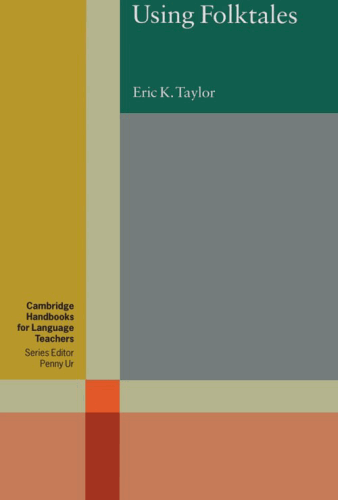
Using Folktales
This book explores how to use stories, folktales in particular, for language teaching. While the book was written for ESL/EFL teachers, many of the activities (especially those on language games, reading, writing, and academic analysis) are also relevant to native speaker classrooms. And while the sample activities primarily use folktales, they apply to stories in general. In addition to providing readily usable activities, this books shows how to create your own activities with any stories that suit the classes you're teaching.
Some Fruits of Solitude
The book takes William Penn's Some Fruits of Solitude and Some More Fruits of Solitude and updates them from the English of the 1600's into contemporary language. (This Herald Press edition is the only contemporary language version of this book.) This edition also includes an extensive historical introduction and end notes that explain Penn's many allusions.
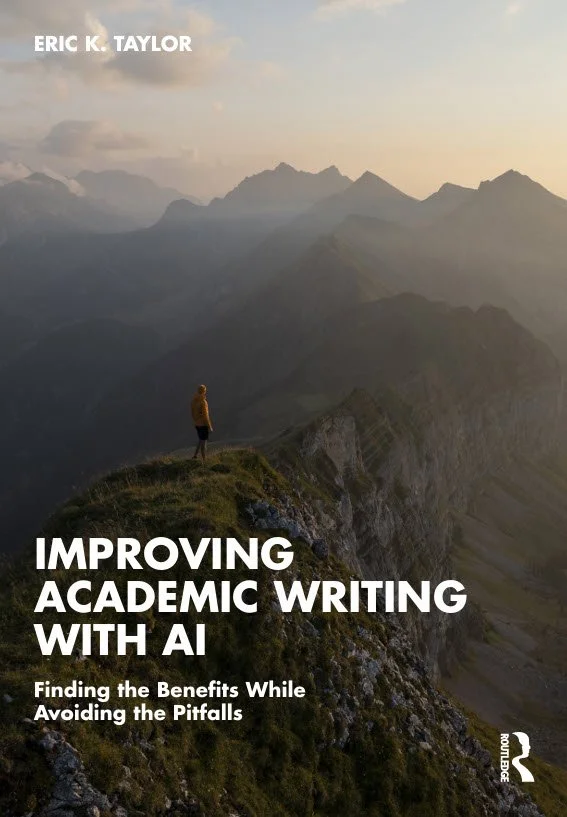
Improving Academic Writing with AI: Finding the Benefits While Avoiding the Pitfalls
Academia is facing a crisis of AI misuse. Students often use AI to bypass the writing process, getting citations for sources they haven’t read, arguing based on hallucinated claims, and “polishing” drafts with inadequately developed ideas. This book transforms the narrative: AI goes from automated re-writer to writing teacher and sophisticated critique partner. The book reframes the AI-writing relationship: it steps writers through the revision process, teaching both foundational and advanced writing skills. AI is no longer an automated rewriter; it becomes a knowledgeable critique partner that identifies problems; the book then helps you evaluate a range of possible solutions. This approach demands that students think about their writing in new ways. It restores writer agency, making AI a learning tool instead of an escape or crutch. With 50 sequenced prompts that guide writers through the writing process, progressing from broad, structural concerns to narrow, line-level edits, the book offers a solution to the problem of AI misuse by offering a way to help writers learn from AI rather than risking AI rewriting that potentially changes content and makes the style more generic and abstract.
This is an ideal text for both non-native and native English speakers. It can help all academics seeking to improve their writing, including undergraduate and graduate students in courses on academic writing, rhetoric and composition, and language/literacy education.